
How can nonprofits and project-based organizations scale fulfillment and logistics support without building massive warehouse infrastructure?
For many mission-driven organizations, growth creates a unique operational challenge.
The impact is expanding. Partnerships are increasing. Projects are getting larger and more frequent.
But the infrastructure behind the scenes often stays lean by design.
That’s exactly where the right logistics and warehousing support can make a difference.
At Elite Warehousing & Fulfillment, one example of this has been our partnership with Give to Get, an organization focused on connecting major companies with local nonprofits to create meaningful community impact through hands-on service projects.
Their work helps bridge the gap between corporate engagement and real community needs, supporting initiatives that range from kits for unhoused individuals to programs benefiting children and families.
But as demand for those programs grew, operational complexity grew with it.
When Growth Creates Operational Pressure
Many nonprofits and project-based organizations do not operate like traditional retailers or manufacturers.
Volume fluctuates.
Projects move quickly.
Timelines shift.
And large-scale requests can appear with very little notice.
In Give to Get’s case, their internal warehouse footprint remained intentionally small because their business model revolves around project-based fulfillment rather than consistent daily distribution.
But as larger projects and corporate partnerships increased, the pressure on space, labor, inventory coordination, and dock access became harder to manage efficiently.
What once worked operationally started requiring constant reconfiguration.
And that’s a common inflection point for growing organizations.
As we discussed in Small Business, Big Warehouse, growth doesn’t always happen in predictable increments. Sometimes opportunities arrive faster than infrastructure can realistically support internally.
The challenge becomes:
How do you scale impact without overbuilding operations?
Supporting Purpose Packs at Scale
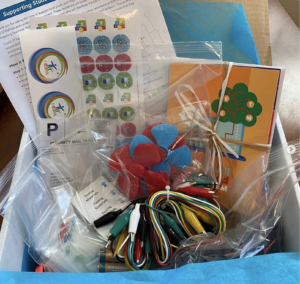
One of the ways Elite supports Give to Get is through their Purpose Pack program.
These pre-built kits are stocked and ready so organizations can quickly launch employee volunteer projects when opportunities arise.
Instead of building every project from scratch under compressed timelines, inventory and components are strategically organized in advance to support faster fulfillment and smoother coordination.
To support that process, Elite helps assemble and manage large pack configurations containing the components needed for multiple individual kits.
That structure creates flexibility.
When a corporate partner is ready to launch a service project quickly, fulfillment can move faster without disrupting day-to-day operations.
The operational side becomes more scalable, responsive, and organized behind the scenes.
Why Flexible Warehousing Matters for Project-Based Organizations
For project-driven organizations, warehouse needs often fluctuate dramatically.
One month may involve moderate inventory movement.
The next may require staging, assembly, and outbound coordination for a large-scale initiative under tight timelines.
That type of variability makes permanent infrastructure expansion difficult to justify.
Instead, flexible warehousing allows organizations to access:
- additional storage space
- dock access
- scalable labor support
- inventory staging
- kitting and assembly capabilities
This mirrors what we explored in Scaling Smarter With Flexible Fulfillment, where elasticity not rigidity often determines whether operations remain manageable during periods of growth.
The goal is not simply more space.
It is operational flexibility.
The Operational Side of Community Impact
Community impact programs rely on more than good intentions.
They also rely on execution.
Inventory has to arrive on time.
Components need to stay organized.
Projects require coordination.
Large fulfillment initiatives need structure behind them.
Without that operational support, even strong programs can experience delays, bottlenecks, or unnecessary stress on internal teams.
According to Give to Get, the organization partners with many of the country’s largest companies to create community engagement opportunities that directly support local nonprofits and underserved populations.
As those partnerships scale, the operational systems supporting them must scale too.
Why This Matters for Growing Organizations
Many organizations assume warehousing is only a concern for traditional commerce businesses.
In reality, nonprofits, project-based groups, and community organizations often face many of the same operational pressures:
- inventory overflow
- space constraints
- labor limitations
- time-sensitive fulfillment
- changing project volume
The difference is that their success is measured in community impact rather than retail sales.
That makes operational reliability even more important.
As we covered in How to Scale Your Business Without Big Investments, flexible logistics support allows organizations to grow without taking on unnecessary long-term overhead or infrastructure commitments.
Building Infrastructure Around Impact
At Elite Warehousing & Fulfillment, we believe warehousing is about more than storage.
It is about creating operational systems that support growth, flexibility, and execution especially for organizations doing meaningful work in the community.
Whether supporting project-based fulfillment, scalable kitting programs, overflow inventory, or large inbound shipments, the goal is always the same:
Helping organizations stay focused on their mission while operations stay organized behind the scenes.
Because sometimes the work that creates the biggest impact starts inside a warehouse.
FAQ: Nonprofit & Project-Based Fulfillment Support
Q: Can nonprofits benefit from warehouse and fulfillment partnerships?
Yes. Many nonprofits and project-based organizations experience operational challenges similar to growing businesses, including inventory management, fulfillment coordination, and fluctuating volume.
Q: What types of logistics support can help project-based organizations?
Flexible storage, kitting, staging, dock access, labor support, and scalable fulfillment services can all help organizations manage changing project needs more efficiently.
Q: Why wouldn’t an organization just expand its own warehouse?
For organizations with fluctuating or project-based demand, permanent expansion may create unnecessary overhead. Flexible warehouse partnerships allow them to scale operationally without committing to long-term infrastructure growth.
Q: What is kitting in a nonprofit or community project setting?
Kitting involves organizing and assembling multiple items into ready-to-distribute packages that support specific programs, initiatives, or events.
Q: How does warehousing help organizations respond faster?
Structured inventory organization, staging, and scalable fulfillment support help reduce delays and improve coordination when projects need to launch quickly.
